
In February 2020, I delivered a couple of workshops in translation technologies, at the Universidad Nacional de Costa Rica. It helped me learn about my colleague’s needs and backgrounds. Overall, I noticed there is an understanding of what CAT tools are and what resources you can use. However, there were attendees who had never used a CAT tool before; others who have been using it (OmegaT), but wouldn’t use its features effectively.
To confirm my first impressions from these workshops (Check out the events’ pages: Introduction to Machine Translation and Introduction to Language Localization and Translation Technologies), I ran a poll that helped me determine the potential interest of colleagues and most importantly the tool I would focus the course on.
The results were very positive. 55 out of 113 colleagues voted for SDL Trados Studio.
With a clear direction and goal set, I have been very engaged during the past 3 months, selecting content, revisiting my experiences, drafting cool visuals, running tests, trying new tools, etc. I feel very much like a scientist in a lab, day and night.
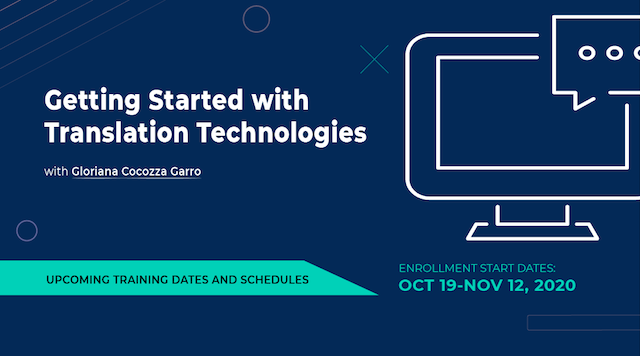
The course is now a reality, and it is about to open its enrollment process from September 7th to the 28th, 2020.
As a localization specialist, I support friendly UX design, together with juicy content and meaningful training. This is why every single part of this course has been carefully designed to meet your schedule, learning needs, as well as the technology required to run it virtually.
Regardless of your field of expertise, whether you are a dedicated law or medical translator, beginner or advanced professional, this course will help you catch up with the latest trends in the language industry.
THE COURSE AT A GLANCE
Getting Started with Translation Technologies covers the topics of translation memories, termbases, standard formats, workflows in localization, automation, best management and quality practices, SDL Trados Studio 2019, and many more dedicated software.
Every lesson breaks down into three parts:
30% Theory
40% Demos and guided practice
30% Bonus activities
The instruction of contents scaffolds from basic to more advanced topics and easy-to-follow demos. Likewise, the successful completion of the guided practices will lay the foundations and technical skills for the student to overcome other common and more challenging tasks autonomously.